
If the first half of 2025 was defined by the novelty of Generative AI, the final quarter was defined by its integration. We have moved decisively past the “experimentation” phase into what I call the “Agentic Era”—a period where AI is no longer just a chatbot on the side, but an integrated layer of intelligence that permeates every channel, workflow, and dataset in the support ecosystem.
Looking back at the release notes from October, November, and December, it is clear that Zendesk has executed a massive strategic pivot. They are no longer just giving us tools to answer questions; they are giving us the infrastructure to understand intent, generate knowledge and democratise data analytics.
For those of us in the CX consultancy space, Q4 represented a maturation of the stack. This wasn’t just about adding new features; it was about fixing the plumbing of customer service to support true automation at scale. Here is my deep dive into the critical shifts from Q4 2025 that should be on your roadmap for 2026.
The End of the “Voice Black Box” 📞
For decades, telephony has been the dark matter of customer service data. We knew it was heavy, we knew it mattered, but analysing it required expensive third-party tools or laborious manual listening. In October, Intelligent Triage finally bridged this gap. The system can now detect intent, sentiment, and language directly from voice calls.

This is a profound architectural shift. It means we can now harvest the structured data we have relied on for email and messaging. Knowing why a customer is contacting us before an agent even picks up is now available for voice. This powers smarter post-call automations and gives CX leaders a truly unified view of customer sentiment, regardless of the channel. It effectively turns your voice channel into a structured data stream, allowing for routing and reporting that was previously impossible without heavy manual dispositioning.
Structured Data Gets a Turbocharge ⚡
Following closely on the heels of voice triage, November brought a feature that arguably went under the radar but is operationally critical: Entity Detection with Custom Ticket Fields. Intelligent triage can now identify specific entities such as order numbers, locations, or product types and populate existing custom fields automatically.
Why does this matter? Because it reduces the manual administrative burden on agents. Instead of an agent having to manually tag a ticket as “Product X” or copy-paste an order number into a field, the AI handles it. It cleans up your data hygiene automatically, ensuring that your reporting downstream is accurate without relying on human compliance. This creates a foundation for automation where workflows trigger based on validated data points rather than messy unstructured text.
The Democratisation of Analytics 📊
Reporting has historically been a bottleneck. Admins are often the gatekeepers of data, creating a lag between a question being asked and an insight being delivered. November’s introduction of Quick Reports changes the dynamic entirely. Leveraging generative AI, admins can now generate reports simply by typing a natural language prompt, such as “In the past week, which group solved the most tickets?”.
This feature essentially turns every manager into an analyst. By removing the complexity of building queries from scratch, Quick Reports accelerates decision-making. It allows teams to spot trends in seconds, not hours, fostering a culture where data is accessible rather than gated behind technical expertise.
Further enhancing this visibility is the new Real-Time Monitoring dashboard released in November. This gives supervisors granular visibility over contact centre performance across channels as it happens, allowing for immediate tactical adjustments rather than retroactive fixes.
Ticket Summaries Become Actionable Data 📝
We have had summarisation for a while, but October made it architecturally significant. Ticket summaries generated by Copilot are now stored in a dedicated ticket field. This might sound like a minor backend tweak, but it is a game-changer for workflows.
Because the summary is now a field, it is accessible via API, usable in placeholders, and viewable in reports. It transforms unstructured conversation data into a concise, portable asset that can be passed to other systems (like a CRM or an ERP) or used to trigger specific workflows based on the content of the summary. This allows for a much smoother handover between departments, as the context travels with the ticket in a digestible format.
Standardisation via AI Writing Tools ✍️
Consistency is the hallmark of a mature support operation. In November, we saw the expansion of Generative AI writing tools into Macros. Agents and admins can now use AI to help write and edit macro content, ensuring that standard responses are not just accurate, but tonally appropriate.
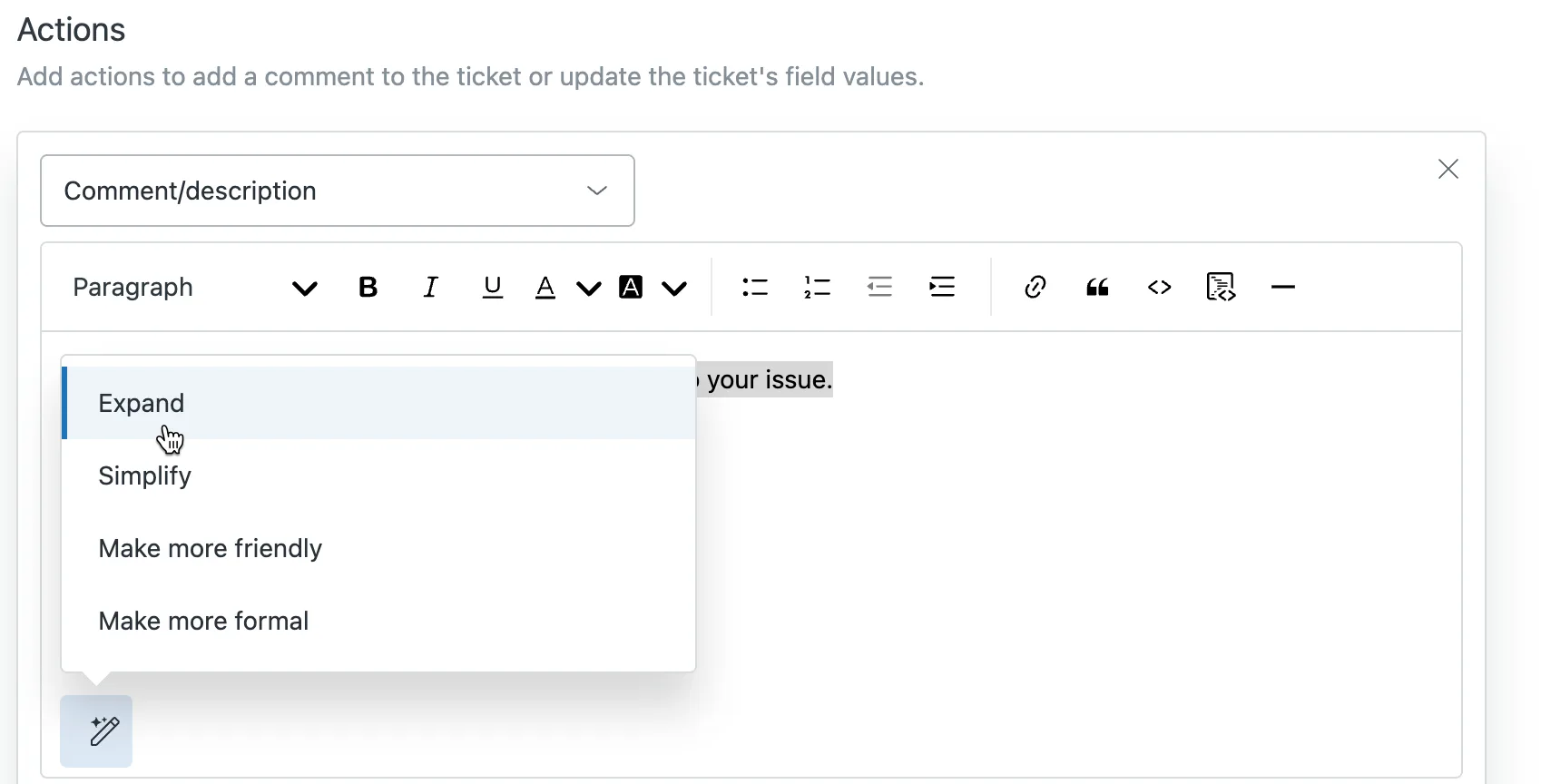
This is particularly powerful for global teams or those managing multi-brand environments. It allows you to take a rough bulleted list of points and transform it into a polished, empathetic response that aligns with your brand voice, ensuring that your library of canned responses remains high-quality without demanding hours of copywriting time.
Knowledge Management Breaks Its Silos 🧱
One of the most persistent challenges in CX is that knowledge lives everywhere; In the Help Centre, in Jira, in Confluence, and on random web pages. The Knowledge updates in late Q4 have effectively dismantled these silos. We can now connect and leverage external content sources, specifically Confluence and almost any webpage, directly to AI Agents.
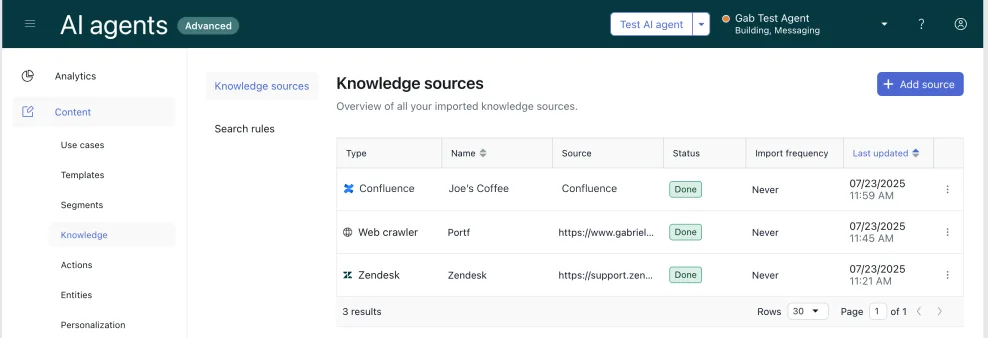
This means your AI agent isn’t limited to what you have manually migrated into Zendesk Knowledge. It can ingest and synthesise answers from your engineering documentation in Confluence or your marketing FAQs on the corporate website. It creates a federated knowledge brain, ensuring customers get accurate answers regardless of where the source truth lives. This drastically reduces the “knowledge debt” that often stalls AI projects.
The “Cold Start” Solution for Self-Service 🧊
Perhaps the most eye-opening feature released in December was Knowledge Builder – the ability to generate a Help Centre from scratch using ticket data. For organisations launching a new brand or startups maturing their support function, the “blank page problem” is paralysing. Zendesk now allows you to use Generative AI to scan the last 30 days of ticket data and key business information to build a foundational Help Centre.
This identifies the most common customer issues and drafts articles to solve them. It collapses weeks of content strategy and copywriting work into a few minutes of processing, providing an immediate ROI by deflecting the very tickets that were used to train it.
Precision Control for Email AI Agents 📧
While chat often gets the glory, email remains the workhorse of B2B support. October introduced “Instructions” for email AI agents. This allows admins to give specific, natural language directions on how the AI should behave—beyond just tone and persona.
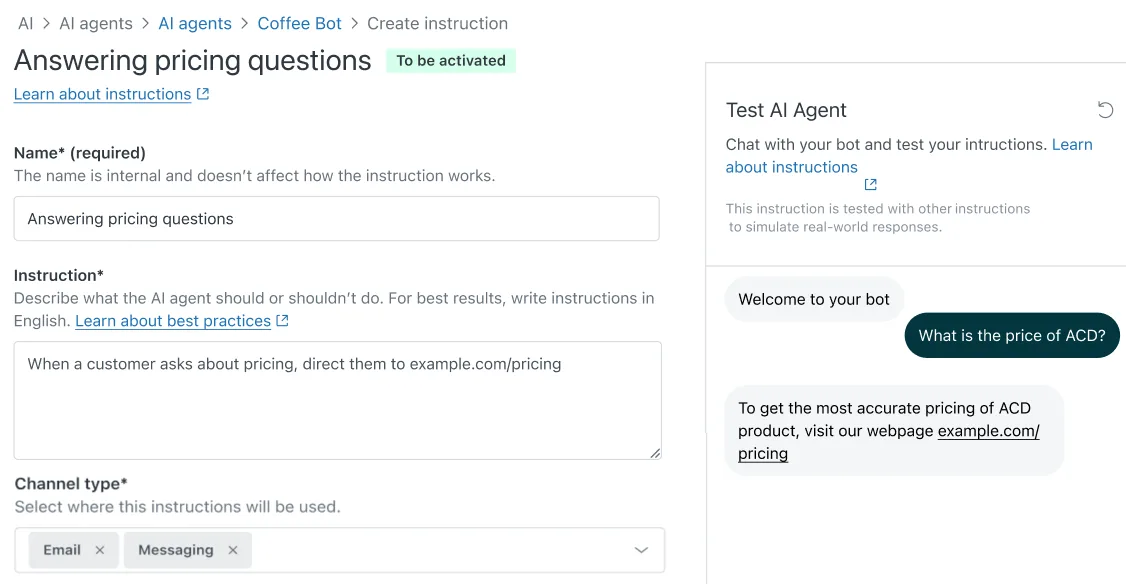
You can now explicitly tell the AI, “If the customer asks about pricing, direct them to this specific URL,” and apply that instruction specifically to the email channel. It brings a level of deterministic control to generative responses, which is crucial for regulated industries or complex support scenarios.
QA Meets Natural Language 🧠
Quality Assurance has traditionally been about checklists. Did the agent say hello? Did they verify the account? October’s release of prompt-based AI insights for Zendesk QA shifts this paradigm. You can now use natural language prompts to ask targeted questions about your conversation data, such as finding specific compliance risks or sentiment trends.
This allows QA teams to move from “checking boxes” to “hunting for insights.” You can automatically score or flag conversations based on complex, subjective criteria that traditional keyword searching would miss, effectively scaling your QA coverage to 100% of interactions without adding headcount.
Governance for the AI Age 🛡️
Finally, as we hand more power to AI, we need more control. December introduced version history for Auto Assist procedures. Every time a procedure is updated, a new version is saved with detailed tracking. This is essential for compliance and optimisation. If a new AI procedure underperforms or provides incorrect advice, you can instantly revert to a previous version. It provides the safety net required for enterprise teams to experiment with Agentic AI workflows without fear of breaking critical processes.
Bottom Line
The Q4 updates from Zendesk paint a clear picture: the future is not just about having an AI chatbot; it is about building an AI-first ecosystem. From giving Voice the intelligence of text , to breaking down knowledge silos with Confluence connectors, the tools are now here to build truly autonomous, intelligent service organisations.
Get a free 14-day trial today here↗
If you are looking to deploy these features or need a strategic audit of your current setup to prepare for 2026, let’s chat.